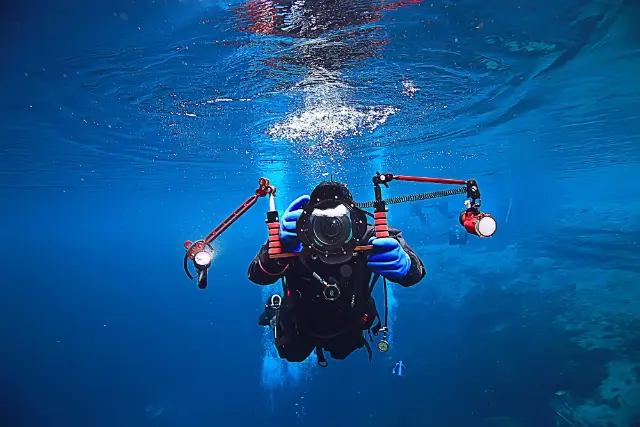
How to Photograph Fish for Easy Identification: An Underwater Photographer's Guide
· Dicky
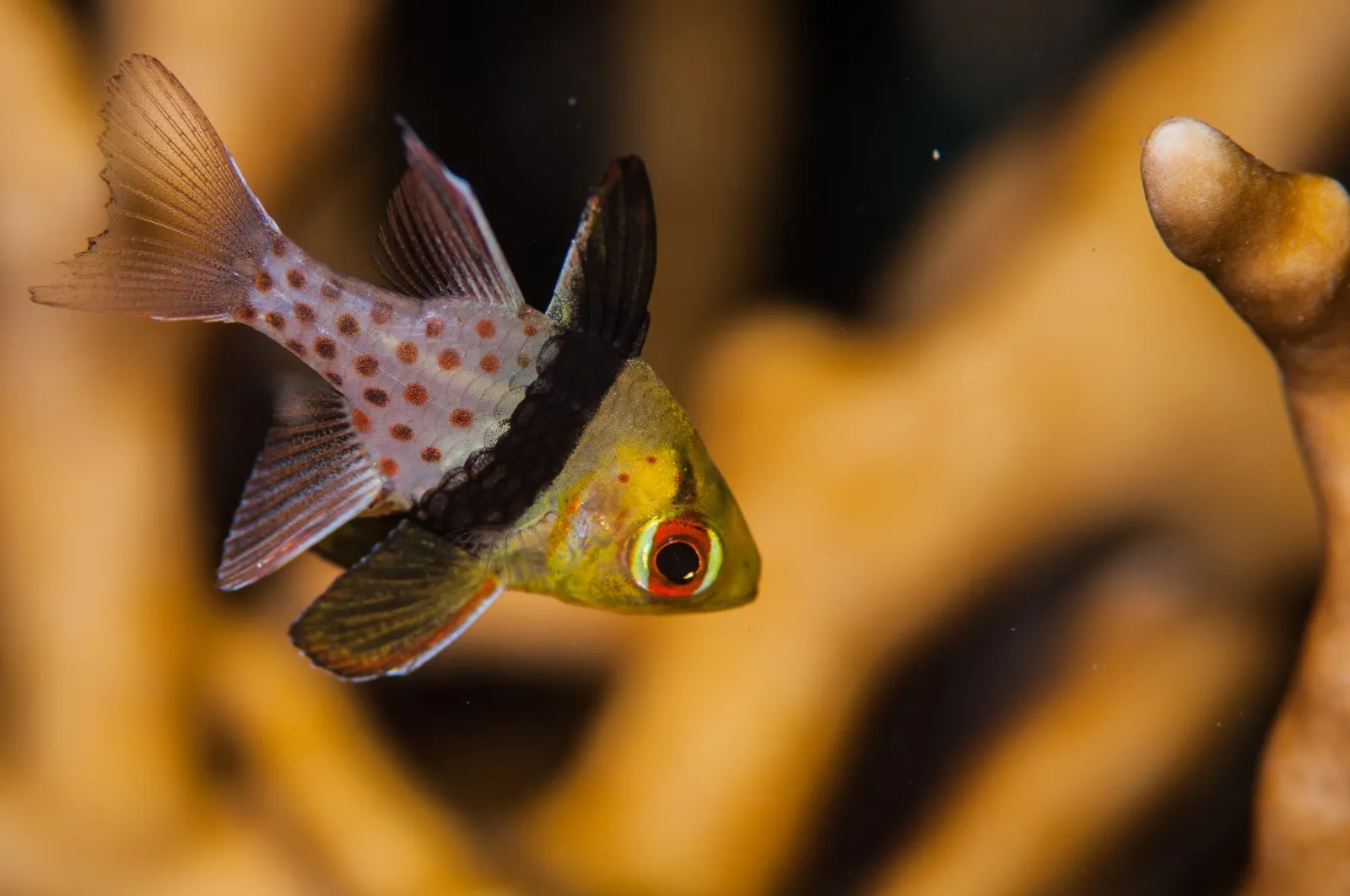
Many divers come home with hundreds of fish photos, only to realise most of them are hard to identify. The fish is blurry, the tail is cut off, or the colours have faded to blue-green. Yet in Indonesia, at the heart of the Coral Triangle, a single fish genus can contain dozens of species that differ only in a stripe pattern, a few spots or the shape of a fin.
This guide covers how to photograph fish so they are easy to identify, whether for your own logbook, scientific records or a Fish ID competition.
A good photo isn't always an identifiable one
Artistic photos chase composition, dramatic light and mood. Identification photos have a simpler goal: show the species' distinguishing features as clearly as possible. Ideally you get both, but if you have to choose, a clear "boring" shot is often more useful than a dramatic silhouette.
Ask yourself every time you press the shutter: "If someone only saw this photo, could they tell which species it is?"
Key features to capture
Ichthyologists identify species from a combination of the following features. Try to capture as many as possible in a single frame:
The whole body shape. Compressed, elongated, rounded or torpedo-shaped. Make sure the fish is in frame from snout to tail tip.
Fins. The dorsal, anal, caudal, pectoral and pelvic fins. Tail shape (forked, rounded or lunate) is often a key difference.
Pattern and colour. Stripes, spots, bands or "saddles", and exactly where they sit on the body.
Head and eyes. Bars through the eye, mouth shape and barbels.
Special features. Spines at the base of the tail (surgeonfish), fin filaments or bumps on the forehead.
Tip: For most reef fish, a full side-on (lateral) shot is the most informative angle. Get that shot first, then explore creative angles.
Shooting techniques for identifiable fish
Get level with the fish
Hold the camera level with the side of the fish's body rather than shooting from above. A top-down shot hides the fins and distorts the body's proportions.
Get close, then closer
Water absorbs colour and sharpness. The more water between your lens and the fish, the flatter the image. Don't rely on zoom; close the distance slowly with good buoyancy control.
Use artificial light
Below a few metres, reds and oranges disappear quickly. A strobe or video light restores true colours, which is often crucial for telling similar species apart. Angle the light slightly away from the subject to reduce backscatter (white specks in the image).
Focus on the eye
A sharp eye makes a photo feel alive, and the head often carries important identification features.
Take several frames and angles
Fish rarely stay still. Shoot a short burst, and when possible add other angles, such as a frontal shot for head patterns or a close-up of the fins.
Record the context
Note location, depth, time and habitat (coral, sand, seagrass). This helps a lot when two species look almost identical.
Common mistakes that make fish hard to identify
Cropped tail or snout. These are often the very features that matter.
Blurry images from a slow shutter speed or the diver moving.
Lost colour from not using artificial light at depth.
Heavy backscatter from strobes pointed straight ahead.
Fish too small in the frame. Heavy cropping destroys detail.
Only shooting from behind as the fish swims away.
Scientific vs. local names
One species can have many local names, and one local name can refer to several species. That's why accurate identification always uses the scientific name (for example Amphiprion ocellaris, not just "clownfish"). Taxonomic databases such as WoRMS (World Register of Marine Species) help confirm that the name you use is valid and current.
Ethics: the best shot never harms the animal
Don't touch, chase or move fish to get a better angle.
Keep your buoyancy under control so you never touch or damage coral.
Limit continuous lighting on sensitive animals and give them breaks.
Respect marine protected area rules and your local dive guide's instructions.
A calm, undisturbed fish is also much easier to photograph well.
Test your Fish ID skills
If you enjoy photographing and identifying fish, Fish ID Nusantara (FIN) is the place to put those skills to the test. Participants photograph fish species at dive sites across Indonesia, and judges verify the species in every photo. The clearer your photo, the lower the chance of a misidentification.
Read the competition rules
FAQ
Do I need an expensive camera to take identifiable fish photos? No. A compact camera in a housing with one light source is enough for most reef fish. Technique and distance matter more than price.
What is the best angle for fish identification? A full side-on (lateral) shot, with the whole body from snout to tail in the frame and the eye in focus.
Can I edit photos to fix the colour? Basic adjustments such as white balance, exposure and a light crop are generally fine. For competitions, always follow the editing rules in force and never alter the fish's physical features.